Business2 min
Supreme Court: Protest Sites Can't Be Occupied Forever, as Delhi Traders Seek Rs 1,000 Cro
The top court says the right to protest and the right to earn a living both count, and daily-wage workers are caught in between.
The Supreme Court said on Tuesday that no political party, NGO or civil society group can hold a protest site indefinitely. A bench of Chief Justice Surya Kant and Justices Joymalya Bagchi and V Mohana was hearing a traders' plea over losses from protests in Delhi.
The traders' association wants Rs 1,000 crore in damages. It blames protests by CJP and the opposition INDIA bloc during the festive season. Senior advocate Mukul Rohatgi urged the court to bar all groups from protesting in Delhi for two months so shops can reopen and workers can be paid.
The bench did not grant that. It asked the association to add the protest organisers, including individuals, organisations and political parties, as parties to the case. The court would then decide on compensation and how any payout is shared.
Senior advocates Menaka Guruswamy, Arundhati Katju and N Hariharan argued that protest is part of free speech and dissent in a democracy. The bench replied that both the right to protest and the right to trade are fundamental rights. It stressed that it was not speaking of trade in a purely commercial sense.
The Chief Justice focused on ordinary earners: daily wagers, hawkers, and vegetable and cart vendors. He asked where they would go when roads and markets shut. He called for an identified protest site that does not hurt their livelihoods, and said the right to protest is not absolute. Each group, he said, should get a fixed period to protest rather than hold a site for all time.
Solicitor General Tushar Mehta said those who call bandhs and agitations must answer for the losses of others. He added that calling people to march to Parliament without permission cannot be allowed.
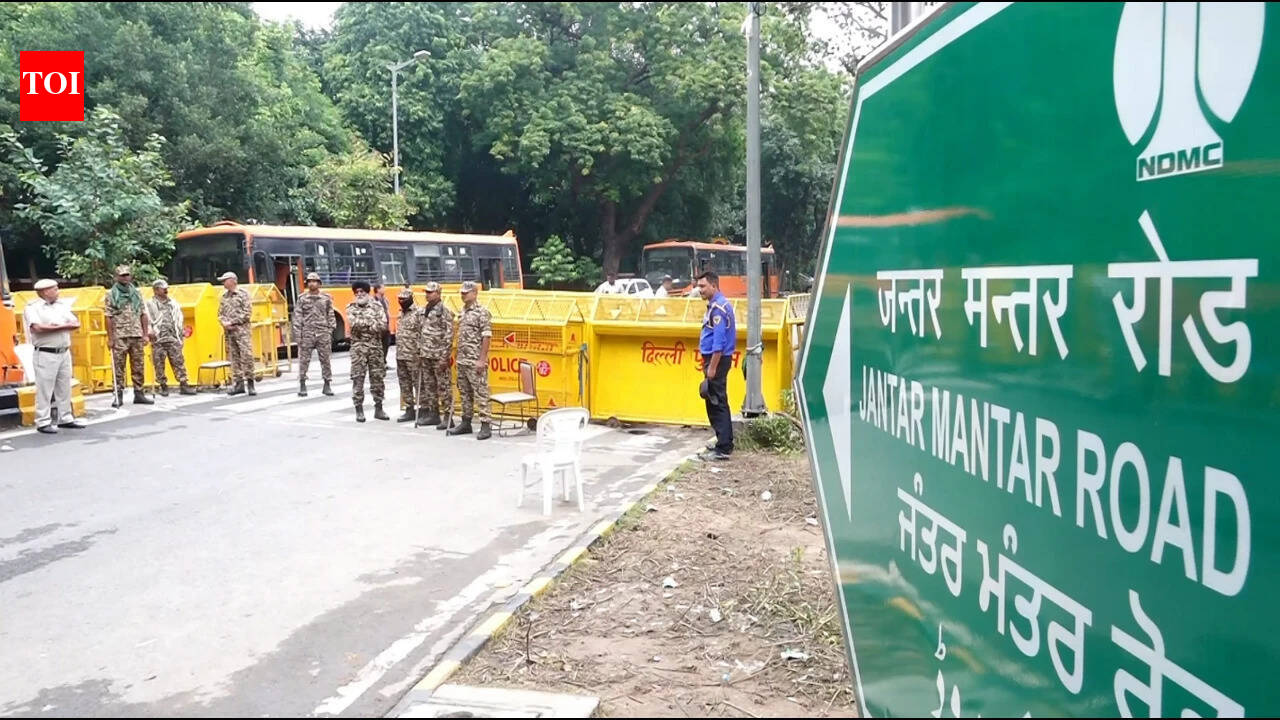
On the denotification of Jantar Mantar as a protest site, Delhi Police Commissioner Anurag Kumar said a committee recommended it after the court's July 2018 order. He cited the security of the new Parliament premises and its uninterrupted functioning.
Read the original report: Times of India.
FiledSupreme CourtRahul GandhiParliamentLok SabhaCongressPolice