Environment2 min
Pulling Carbon Out of the Air: Can Tech and Forests Keep Up With Warming?
Warming is speeding up, and the tools built to pull greenhouse gases back out of the atmosphere are still small, costly, and struggling to outpace the problem.
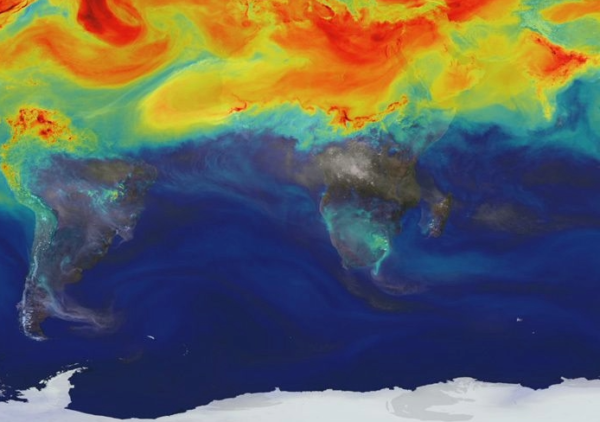
The planet is running a fever, and the cure is harder than the diagnosis. Scientists estimate that human activity since the mid-1800s has added nearly a trillion tons of carbon dioxide and other greenhouse gases to the air. That buildup has already warmed the planet's surface by about 0.45°C (0.8°F), and the real figure is likely higher once methane, nitrous oxide, and water vapour are counted.
The World Meteorological Organization reported in 2024 that global temperatures sat between 1.34°C and 1.41°C above mid-19th century levels. Averaged over several decades, the rise is speeding up. At current rates, the planet is warming by about 0.27°C (0.49°F) every ten years. The agency points to a simple cause: we keep emitting gases faster than nature can soak them up.
That is why a growing group of researchers and companies is asking a blunt question. If emissions cannot be stopped fast enough, can we pull the gases back out? The answer depends on the method. Direct air capture uses machines to draw carbon dioxide from ambient air and bury it in geologically stable rock. Companies such as Climeworks, 1PointFive, Heirloom Carbon Technologies, CarbonCapture Inc., and Deep Sky are testing the approach, but total carbon removed and stored so far has yet to reach 10,000 tons. The technology works, but it is expensive and still tiny in scale.
Nature has a head start. Forests, mangroves, salt marshes, and seagrass pull carbon from the air and store it in plants and soil. Natural methods currently account for roughly 85 to 90 percent of the carbon being removed. Governments have pledged, through the United Nations, to restore 1 billion hectares of forest by 2030, an area about the size of the United States and Canada combined. The catch is that new growth and restoration are not yet keeping pace with logging, farm clearing, and wildfires that release carbon back into the sky.
Biochar offers a middle path. Through a process called pyrolysis, farm waste is heated into stable charcoal that can lock carbon into soil for long periods. The technical potential is estimated at 0.44 to 2.62 gigatons of carbon dioxide by 2030, though the current volumes are far smaller. Bioenergy with carbon capture and storage, known as BECCS, takes a different route by growing biomass for energy and capturing the emissions it produces.
For readers, the takeaway is practical. Cutting emissions remains the first priority, because every ton avoided is a ton that never needs to be removed. Carbon removal is the backup plan, and right now the cheapest backup is also the oldest one: healthy forests and wetlands. Tech-based removal could matter more later, but it needs to grow dramatically before it can make a dent. For a deeper look at the science and the options, read the full explainer at 21stcentech.com.